
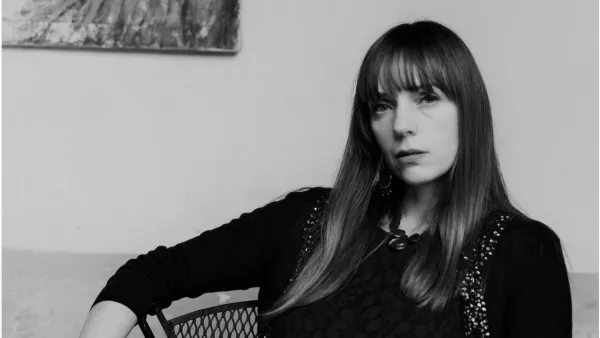
Comparative Literature Graduate Student Sarah Maria Medina's English translations of Marosa di Giorgio´s The Moth (Spanish) came out 19 January, 2023 on Asymptote Journal.
The poems in La Falena (The Moth; Arca, 1987) function as allegories for specific acts of violence (both the personal and communal), yet also extend beyond allegory, building an alternative historical narrative of a country's survival. The collection of prose poems, La Falena, was first published two years after the civic-military dictatorship ended in Uruguay. There is a strong urge toward witness in the poems, and within the act of witnessing, there is poetic negation. Negative capability powerfully complicates the narrative: “Listen, yes, ‘the children of the night make their music’; but they don’t participate in the feast. I am the witness. Or they participate, I don’t know.”
In The Moth, sweetness counters the violence—persecution lies within the beauty of a landscape; resilience surfaces; after the violence, the black butterfly remains, still present, although changed. The moth is the erebid moth also known as the bruja negra, the black witch, and in Nahuatl, mictlanpapalotl, which translates as mariposas del pais de los muertos, or butterflies from the country of the dead. The prose poems enter the legend from various perspectives. Sometimes it is a young child who witnesses the violence; other times the speaker is the moth. In other poems, the moth is absent, and the narrative focuses on the landscape of di Giorgio’s childhood, bringing in the quotidian and expanded by the surreal. In one poem, the speaker is fevered, desperate for the father’s attention, calling out, “And you don’t say anything. Won’t you come to listen?”
In my translation of these poems, I have privileged their sound and unusual syntax, opting for opacity, and a queerness to the text that centers di Giorgio’s voice. I chose opacity in part in resistance to expectations of realism and personal narrative often placed on writers from Latin America. The Moth is both testimonial and anti-testimonial. In conversation with surrealism, and through surrealist imagery, di Giorgio was able to subversively critique the world around her, while simultaneously giving witness to the transformative nature of poetry. In the wild landscape, each scene is unpredictable, vibrant, alive.
Sarah María Medina has been published in Poetry, Prelude, Black Warrior Review, Poetry NW, and elsewhere. She is the recipient of an ARTIST UP Grant LAB, a Jack Straw Writer fellowship, a Caldera AIR 2018, and the Black Warrior Review poetry prize. She is from the American Northwest, currently pursuing her Phd in comparative literature for International Writers at Washington University in Saint Louis, Missouri.
