Lynne Tatlock

Lynne Tatlock

Lynne Tatlock

Hortense and Tobias Lewin Distinguished Professor in the Humanities
PhD, Indiana University
research interests:
  • German Literature
  • Book History
  • Gender Studies and Women’s Writing
  • History of the Novel
  • Literature and Medicine
  • Literature and Society
  • Nationalism
  • Reading Cultures
  • Regionalism
  • Translation and Cultural Mediation
View All People

contact info:

mailing address:

  • Washington University
    MSC 1104-146-319
    One Brookings Drive
    St. Louis, MO 63130-4899

​Professor Tatlock has published widely on German literature and culture from 1650 to the 1990s with a particular focus on the late seventeenth century and the nineteenth century.

Tatlock has maintained an abiding interest in the novel and its origins, the construction and representation of gender, reading communities and reading habits, nineteenth-century regionalism and nationalism, and the intersection between fiction and other social and cultural discourses. Some of her recent publications include books, edited and co-edited volumes, translations, and articles on the seventeenth-century poet Catharina Regina von Greiffenberg, the American translator of E. Marlitt, nineteenth-century American reading of German women’s writing, Gustav Freytag's alternative address to national community, Gabriele Reuter as contributor to the New York Times, new approaches to book history and literary history, reception and the gendering of German culture, and cultural transfer.

She has undertaken literary translations of two novels by women, Marie von Ebner-Eschenbach’s Their Pavel (Das Gemeindekind) and Gabriele Reuter’s From a Good Family; selections from Catharina Regina von Greiffenberg's meditations on the incarnation, passion, and death of Jesus Christ; and Justine Siegemund’s seventeenth-century midwife’s handbook. Her activity as literary translator has fueled her scholarly work on cultural mediation, reception, and the international book trade.

Her teaching at present centers on questions of regionalism and nationalism and reader communities, nationalism and French-German relations, the construction and representation of community, nineteenth and early twentieth-century women writers, bourgeois literature and reading habits, literary genres and violence, and book history.
Selected Publications

German Literature as a Transnational Field of Production, 148-1919. Ed. Lynne Tatlock and Kurt Beals. Rochester, NY Camden House, 2023.

Jane Eyre in German Lands: The Import of Romance, 1848-1918 New Directions in German Studies 34 (New York Bloomsbury Press, 2022).

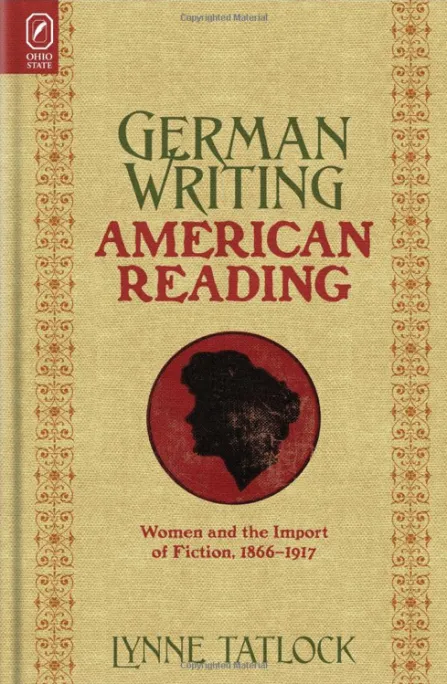
German Writing/ American Reading: Women and the Import of Fiction, 1866-1917. Columbus, OH: Ohio State University Press, 2012.

“How to Be a German Woman: Mixed Messages at the Columbian Exposition,” in Global Voices from the Women’s Library at the World’s Columbian Exposition: Feminisms, Transnationalism and the Archive, edited by Marija Dalbello and Sarah Wadsworth (Cham, Switzerland: Palgrave/MacMillan, 2023), 115-34.

“Making Sense of Snippets: Thekla von Gumpert’s Album for Girls, ca. 1871-1914,” in Miszellanes Lesen. Interferenzen zwischen medialen Formaten, Romanstrukturen und Lektürepraktiken im 19. Jahrhundert, edited by Daniela Gretz, Marcus Krause, and Nicolas Pethes, Journalliteratur 5 (Hannover: Wehrhahn, 2022), 315-42.

German Writing, American Reading: Women and the Import of Fiction, 1866-1917

German Writing, American Reading: Women and the Import of Fiction, 1866-1917

In postbellum America, publishers vigorously reprinted books that were foreign in origin, and Americans thus read internationally even at a moment of national consolidation. A subset of Americans’ international reading—nearly 100 original texts, approximately 180 American translations, more than 1,000 editions and reprint editions, and hundreds of thousands of books strong—comprised popular fiction written by German women and translated by American women.

Tatlock examines the genesis and circulation in America of this hybrid product over four decades and beyond. These entertaining novels came to the consumer altered by processes of creative adaptation and acculturation that occurred in the United States as a result of translation, marketing, publication, and widespread reading over forty years. These processes in turn de-centered and disrupted the national while still transferring certain elements of German national culture. Most of all, this mass translation of German fiction by American women trafficked in happy endings that promised American readers that their fondest wishes for adventure, drama, and bliss within domesticity and their hope for the real power of love, virtue, and sentiment could be pleasurably realized in an imagined and quaintly old-fashioned Germany—even if only in the time it took to read a novel.

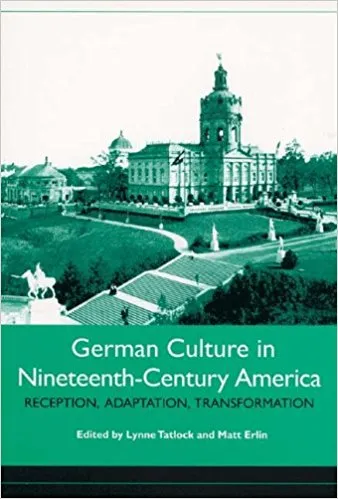
German Culture in Nineteenth-Century America: Reception, Adaptation, Transformation

German Culture in Nineteenth-Century America: Reception, Adaptation, Transformation

Building on recent trends in the humanities and especially on scholarship done under the rubric of cultural transfer, this volume emphasizes the processes by which Americans took up, responded to, and transformed German cultural material for their own purposes. The fourteen essays by scholars from the US and Germany treat such topics as translation, the reading of German literature in America, the adaptation of German ideas and educational ideals, the reception and transformation of European genres of writing, and the status of the "German" and the "European" in celebrations of American culture and criticisms of American racism. The volume contributes to the ongoing re-conception of American culture as significantly informed by non-English-speaking European cultures. It also participates in the efforts of historians and literary scholars to re-theorize the construction of national cultures. Questions regarding hybridity, cultural agency, and strategies of acculturation have long been at the center of postcolonial studies, but as this volume demonstrates, these phenomena are not merely operative in encounters between colonizers and colonized: they are also fundamental to the early American reception and appropriation of German cultural materials. 

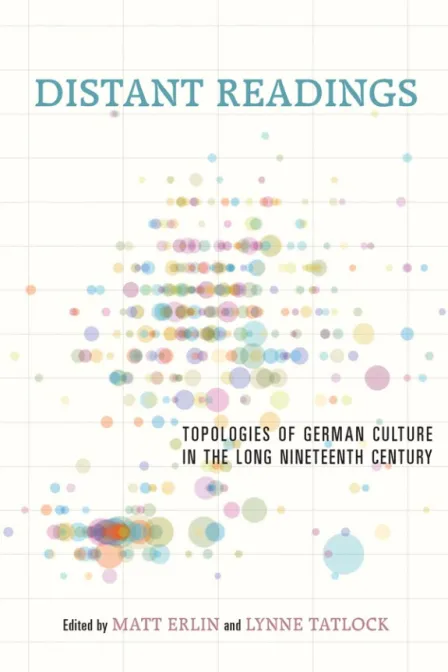
Distant Readings: Topologies of German Culture in the Long Nineteenth Century

Distant Readings: Topologies of German Culture in the Long Nineteenth Century

In nineteenth-century Germany, breakthroughs in printing technology and an increasingly literate populace led to an unprecedented print production boom that has long presented scholars with a challenge: how to read it all? This anthology seeks new answers to the scholarly quandary of the abundance of text. Responding to Franco Moretti's call for "distant reading" and modeling a range of innovative approaches to literary-historical analysis informed by the burgeoning field of digital humanities, it asks what happens when we shift our focus from the one to the many, from the work to the network.


The thirteen essays in this volume explore the evolving concept of "distant reading" and its application to the analysis of German literature and culture in the long nineteenth century. The contributors consider how new digital technologies enable both the testing of hypotheses and the discovery of patterns and trends, as well as how "distant" and traditional "close" reading can complement each another in hybrid models of analysis that maintain careful attention to detail, but also make calculation, enumeration, and empirical description critical elements of interpretation.

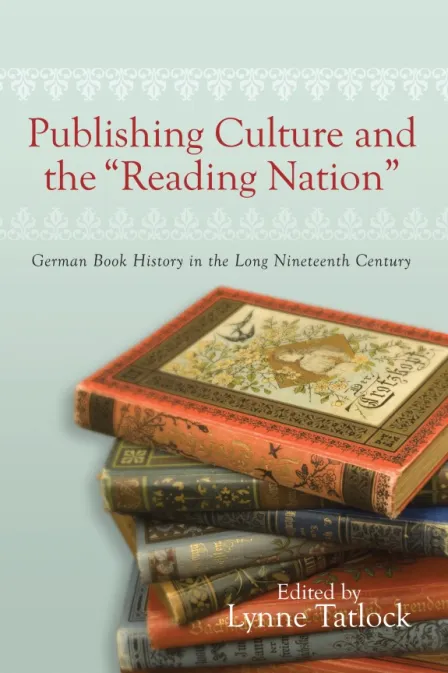
Publishing Culture and the "Reading Nation": German Book History in the Long Nineteenth Century

Publishing Culture and the "Reading Nation": German Book History in the Long Nineteenth Century

Over the long nineteenth century, German book publishing experienced an unprecedented boom, outstripping by 1910 all other Western nations. Responding to the spread of literacy, publishers found new marketing methods and recalibrated their relationships to authors. Technical innovations made books for a range of budgets possible. Yearbooks, encyclopedias, and boxed sets also multiplied. A renewed interest in connoisseurship meant that books signified taste and affiliation. While reading could be a group activity, the splintering of the publishing industry into niche markets made it seem an ever-more private and individualistic affair, promising variously self-help, information, Bildung, moral edification, and titillation. The essays in this volume examine what Robert Darnton has termed the "communications circuit": the life-cycle of the book as a convergence of complex cultural, social, and economic phenomena. In examining facets of the lives of select books from the late 1780s to the early 1930s that Germans actually read, the essays present a complex and nuanced picture of writing, publishing, and reading in the shadow of nation building and class formation, and suggest how the analysis of texts and the study of books can inform one another.

Jane Eyre in German Lands: The Import of Romance, 1848-1918

Jane Eyre in German Lands: The Import of Romance, 1848-1918

Lynne Tatlock examines the transmission, diffusion, and literary survival of Jane Eyre in the German-speaking territories and the significance and effects thereof, 1848-1918. Engaging with scholarship on the romance novel, she presents an historical case study of the generative power and protean nature of Brontë's new romance narrative in German translation, adaptation, and imitation as it involved multiple agents, from writers and playwrights to readers, publishers, illustrators, reviewers, editors, adaptors, and translators.

Jane Eyre in German Lands traces the ramifications in the paths of transfer that testify to widespread creative investment in romance as new ideas of women's freedom and equality topped the horizon and sought a home, especially in the middle classes. As Tatlock outlines, the multiple German instantiations of Brontë's novel-four translations, three abridgments, three adaptations for general readers, nine adaptations for younger readers, plays, farces, and particularly the fiction of the popular German writer E. Marlitt and its many adaptations-evince a struggle over its meaning and promise. Yet precisely this multiplicity (repetition, redundancy, and proliferation) combined with the romance narrative's intrinsic appeal in the decades between the March Revolutions and women's franchise enabled the cultural diffusion, impact, and long-term survival of Jane Eyre as German reading.

Though its focus on the circulation of texts across linguistic boundaries and intertwined literary markets and reading cultures, Jane Eyre in German Lands unsettles the national paradigm of literary history and makes a case for a fuller and inclusive account of the German literary field.